
PDO (Polydioxanone) Threads
in Los Angeles, California
Subtle Lift. Lasting Structure. A Natural-Looking Reset.
At Renova Med Spa, we use PDO threads to offer gentle, non-surgical lift and support to areas of the face where the skin has begun to loosen or sag. PDO threads are a medically guided way to stimulate collagen, reposition soft tissue, and refine your natural contours with minimal downtime.
Threads are one of the most nuanced procedures we perform. Placement, depth, and vector planning all matter. So does restraint.
When done properly, thread lifting should never look obvious. The objective remains to maintain a natural appearance, albeit enhanced through support, rejuvenation, and improved alignment with one’s distinctive features.
What Are PDO Threads?
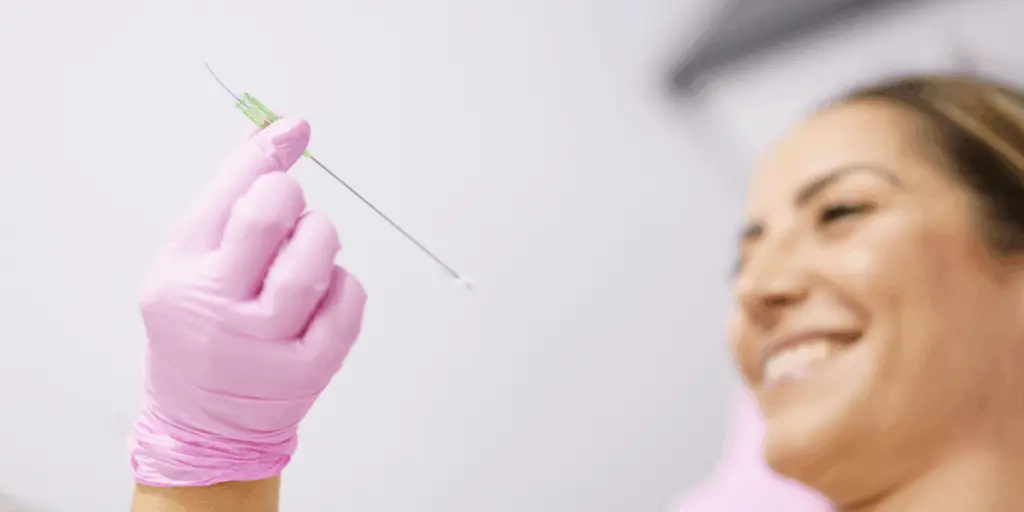
PDO stands for polydioxanone, a biocompatible material used safely in surgery for decades. These threads are placed just beneath the surface of the skin, where they serve two essential purposes:
PDO (Polydioxanone) threads offer a dual mechanism of action, providing both immediate mechanical lift and long-term collagen stimulation, which collectively contribute to a more youthful and rejuvenated appearance.
1. Mechanical Lift
The polydioxanone threads are meticulously inserted into the subcutaneous layer of the skin. Once in place, they act as a supportive scaffold, anchoring and repositioning sagging tissues. This provides an immediate, subtle elevation in areas prone to laxity, such as the cheeks, jawline, and brows.
The precise placement of these threads allows for a customized lift, tailored to the individual’s facial anatomy and desired aesthetic outcome. This initial lifting effect is visible immediately after the procedure, offering a noticeable improvement in facial contours.
2. Collagen Stimulation
Beyond the initial mechanical lift, one of the most significant benefits of PDO threads lies in their ability to stimulate the body’s natural collagen production. As the body gradually metabolizes and breaks down the polydioxanone threads over a period of several months, it initiates a healing response that leads to the formation of new collagen fibers along the path of the dissolved threads.
This process, known as neocollagenesis, continues long after the threads have completely dissolved. The newly formed collagen significantly improves the skin’s firmness, elasticity, and overall texture, leading to a more supple and youthful complexion. This delayed, yet sustained, improvement contributes to the long-lasting rejuvenating effects of PDO threads, making them a popular choice for those seeking both immediate and progressive anti-aging benefits.
There are different types of PDO threads used for different purposes. At Renova, we carefully choose the correct thread design based on your treatment goals.
Where Threads Began and Why They Matter
The concept behind thread lifting began in the 1990s, when physicians in South Korea first introduced the idea of using absorbable surgical threads to reposition soft tissue without cutting the skin. These early versions evolved into the modern PDO thread lift, which uses the same material found in dissolvable sutures to gently anchor and support the skin from beneath.
What made this technique revolutionary was not just the lift it provided. It was the dual effect. PDO threads not only reposition the tissue, they also trigger the body’s own healing response. Upon the dissolution of these threads, novel collagen is generated, a protein integral to the skin’s structural integrity, tensile strength, and elasticity.
This is what makes the procedure so unique. It provides both immediate and long-term results, using your own biology to improve skin firmness over time. No foreign volume. No skin removal. No visible scarring.
It is a minimalist intervention with intelligent design.
At Renova, we use this technology with purpose and precision. We do not overuse it. We do not chase tightness for its own sake. We study the tension points of the face, the thickness of the skin, the integrity of the support structures and we place each thread where it will do the most good with the least disruption.
That is the genius of the procedure. And that is how it should be done.
Types of Threads We Use
Barbed Threads (Lifting Threads)
These threads have tiny barbs that grip tissue and allow us to reposition skin. They provide a visible lifting effect and are commonly used in the midface, jawline, and neck.
Smooth Threads (Collagen-Stimulating Threads)
These threads do not lift but are placed in a mesh-like pattern to stimulate collagen production. Best for crepey skin, fine lines, and texture improvement in areas like the cheeks, lips, or under the eyes. The placement of both types of threads requires anatomical planning and knowledge of underlying structures. We use threads conservatively and only where they offer a clear benefit.
What PDO Threads Can and Cannot Treat
Threads can help with:
- Mild to moderate sagging in the midface
- Early jowls or softening of the jawline
- Brow heaviness or a tired upper face
- Skin laxity in the lower face or neck
- Fine lines and crepey skin in targeted areas
- Subtle definition without volume-based fillers
Threads are not the best choice for:
- Heavy sagging that would benefit more from surgery
- Deep static wrinkles caused by muscle folding
- Significant volume loss that requires filler support
- Skin conditions requiring resurfacing or regeneration
If threads are not right for your goals, we will explain why and guide you toward treatments that are better suited. Your outcome matters more than offering a trendy procedure.
Treatment Areas for PDO Threads
- Midface
Lifts the cheeks and restores support to the lower eyelid region
- Jawline
Softens jowls and defines the mandibular contour
- Brows
Offers a subtle lift to heavy upper eyelids and lateral brow descent
- Neck
Tightens loose skin and improves definition along the front and sides of the neck
- Under the chin
Supports skin in the submental region without creating bulk
- Perioral area
Smooth threads help improve skin texture and fine lines around the mouth
What to Expect
PDO thread treatment typically takes about forty five to sixty minutes. We use local anesthetic to ensure comfort. You may feel pressure or a tugging sensation during the lift, but the procedure is generally well tolerated.
Mild swelling or bruising may occur and typically resolves within a few days. You may be advised to avoid heavy chewing, facial massage, or strenuous movement for the first week to allow threads to settle properly.
Results from lifting threads are visible immediately and continue to improve over three to six months as collagen forms. Smooth threads stimulate gradual improvement in texture and firmness with repeated use.
Frequently Asked Questions
How long do results last?
Lifting results typically last twelve to eighteen months, depending on the area treated, your skin quality, and your overall health. Collagen-building effects from smooth threads may continue even after the threads dissolve.
Is the treatment painful?
We use local anesthesia and nerve blocks when needed. Most patients are surprised by how comfortable the experience is.
Are threads permanent?
No. PDO threads dissolve naturally in the body over time. They are completely biocompatible and leave behind collagen, not foreign material.
Can I combine threads with other treatments?
Yes. Threads can be combined with fillers, neurotoxins, PRF, or laser for comprehensive facial rejuvenation. We will help you design a layered treatment plan that fits your goals.
Are there risks or side effects?
All medical procedures carry some risk. In rare cases, patients may experience bruising, asymmetry, thread visibility, or minor inflammation. These are typically temporary and manageable. As physicians, we are trained to prevent and treat complications quickly and safely.